
What are extraordinary circumstances? And what does it mean for your compensation rights?
Is your flight delayed or cancelled, and has the airline cited “extraordinary circumstances” as the reason? If so, you’re far from alone – and it’s actually one of the most commonly used (and most misunderstood) terms when airlines need to explain why they won’t pay compensation. In this post, we’ll go through what ‘extraordinary circumstances’ actually cover, when the airline can genuinely avoid paying, and when they’re simply hoping you won’t look into the matter any further.
In short: What are extraordinary circumstances?
Extraordinary circumstances (sometimes referred to as force majeure) are events beyond the airline’s control – that is, situations which the airline could neither have foreseen nor prevented, even if it had taken all reasonable precautions. It is a legal term derived from EU Regulation 261/2004 (often simply referred to as EU261 or the UK version UK261), which sets out air passengers’ rights in the event of delays, cancellations and denied boarding.
The idea behind the rule is actually very logical: an airline should not be penalised financially for things that are not really its fault. But in practice, many airlines use the term much more broadly than the law actually allows – and this is where it becomes interesting for you as a passenger. On our page about significant victories we’ve achieved over the years, you can see several examples of cases where the airline invoked ‘extraordinary circumstances’ but was nevertheless obliged to pay compensation.
When is a circumstance ‘extraordinary’?
For a situation to be classified as an extraordinary circumstance, it must be beyond the airline’s control. Examples typically recognised as extraordinary circumstances include:
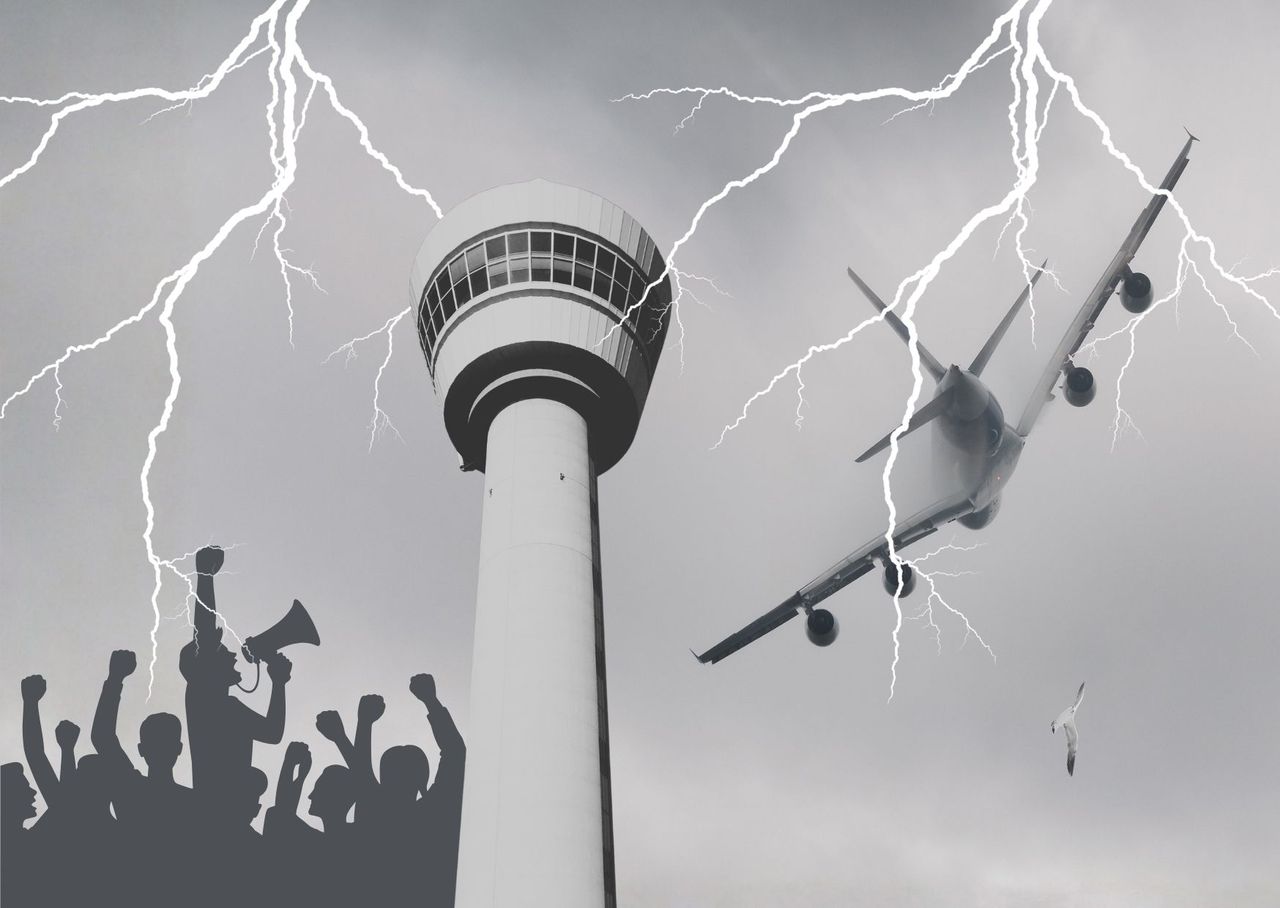
Bad weather – heavy fog, storms, snow or other weather conditions that make it genuinely unsafe to fly
Security issues and threats, including terrorism and political unrest (for example, when the Foreign Office advises against travel to a particular area)
Strikes by third parties – for example, airport staff, air traffic controllers or security guards; in other words, strikes in which the airline itself is not involved
Bird strikes, i.e. collisions between the aircraft and a bird
ATC restrictions, when air traffic control suspends flights for various reasons
Natural disasters, if they actually affect the ability to fly in the area
Passengers who are unwell or causing serious disruption, resulting in the aircraft being forced to land. This applies only to passengers and not to the crew on board.
What they all have in common is that the airline could not have done anything to prevent the situation – no matter how well they had planned.
What does NOT count as extraordinary circumstances?
This is where many airlines try to draw the line somewhere other than where the law actually permits. Technical faults during normal operations are rarely regarded as extraordinary circumstances – for example, normal wear and tear on the aircraft, which should have been detected during routine maintenance. The same applies to staff shortages, poor planning on the part of the airline, or strikes by the airline’s own staff.
In other words: just because the airline calls something an extraordinary circumstance, it isn’t necessarily true. And in fact, it isn’t up to you to prove otherwise – the airline must be able to prove the existence of extraordinary circumstances to avoid paying compensation. The burden of proof therefore lies with them, not with you.
When are you entitled to compensation?
If the delay or cancellation of your flight is not due to extraordinary circumstances, you are entitled to compensation:
In the event of a delay of three hours or more compared with the original arrival time
In the event of cancellation, if you were notified less than 14 days before the scheduled departure and were not offered a satisfactory alternative flight
If you are denied boarding against your will, typically due to an overbooked flight
Compensation ranges from £220 to £520 (equivalent to 250–600 euros), depending on the length of the flight. In the event of very long delays, where the flight is delayed by more than five hours and you choose not to travel after all, you may instead be refunded the full ticket price.
This applies both if your flight departs from an airport within the EU/UK and, in many cases, if you are flying with an EU- or UK-based airline to a destination inside the EU.
How airlines typically respond
Unfortunately, it is quite common for the airline to reject your claim by initially citing ‘extraordinary circumstances’ – regardless of whether this actually holds up legally. Sometimes the explanation is entirely legitimate (for example, bad weather that closed the airport), but at other times the term is used as a convenient excuse to avoid paying.
Furthermore, if your first flight is severely delayed or cancelled, you are entitled to be rebooked onto the next available flight – even if it is with a different airline, provided that the conditions of travel are comparable, i.e. without you having to pay extra or travel at a significantly less convenient time or with more stopovers than necessary.
What can you do yourself if your flight is delayed or cancelled?
Contact the airline as soon as possible – both to enquire about rebooking your journey and to obtain written confirmation of the reason for the delay or cancellation
Keep all receipts for food, transport and any hotel accommodation you’ve had to pay for yourself, so that you can later claim a refund from the airline
Make a note of the times – the original departure time, the actual departure time, and when you were notified of the delay or cancellation
Have your case looked into, even if the airline has rejected your claim on the grounds of extraordinary circumstances. Such a rejection is far from always legally valid
What are you entitled to whilst you wait?
Regardless of whether the delay or cancellation later turns out to be due to extraordinary circumstances, you have certain rights right now, whilst you are waiting at the airport:
If your flight is delayed by more than two hours, you are entitled to reasonable refreshments – that is, food and drink – commensurate with the waiting time
If your flight is delayed until the following day, you are entitled to hotel accommodation, as well as transport to and from the hotel
You are also entitled to two free phone calls or emails so that you can inform others of your situation
These rights apply even if the airline later rejects your claim for financial compensation on the grounds of extraordinary circumstances. So keep all receipts for food, transport and any hotel accommodation – because if the airline does not offer this itself, you can have your reasonable expenses reimbursed afterwards.
Has the airline rejected your claim on the grounds of ‘extraordinary circumstances’? That isn’t necessarily the end of the matter
This is one of the most common excuses we come across at Refundmore: the airline rejects your claim on the grounds of exceptional circumstances, without the explanation necessarily holding water. We know the rules, court practice and the typical excuses used by various airlines – and we investigate the case thoroughly before concluding that the airline is actually in the right.
At Refundmore, we work on a no-win-no-fee basis. This means that having your case assessed is free of charge, and you only pay if we actually secure your compensation. So whether your flight was delayed, cancelled or you were denied boarding – let us look into the matter before you accept the airline’s rejection.